
As I sat in a bustling Korean BBQ joint, I couldn’t help but notice the joy on people’s faces as they shared plates of sizzling meat. That delight led me to recreate the magic of Korean Beef Bulgogi—an absolute crowd-pleaser that’s both a quick fix for dinner and a chance to impress guests with your culinary skills. This classic dish, characterized by its smoky and sweet notes, is not only effortless to whip up but also completely customizable to suit your taste buds. With just a 15-minute cook time, it’s perfect for those who crave homemade comfort without the stress of lengthy prep. Ready to take your taste buds on an exciting journey? Let’s dive into this flavorful world of bulgogi together!
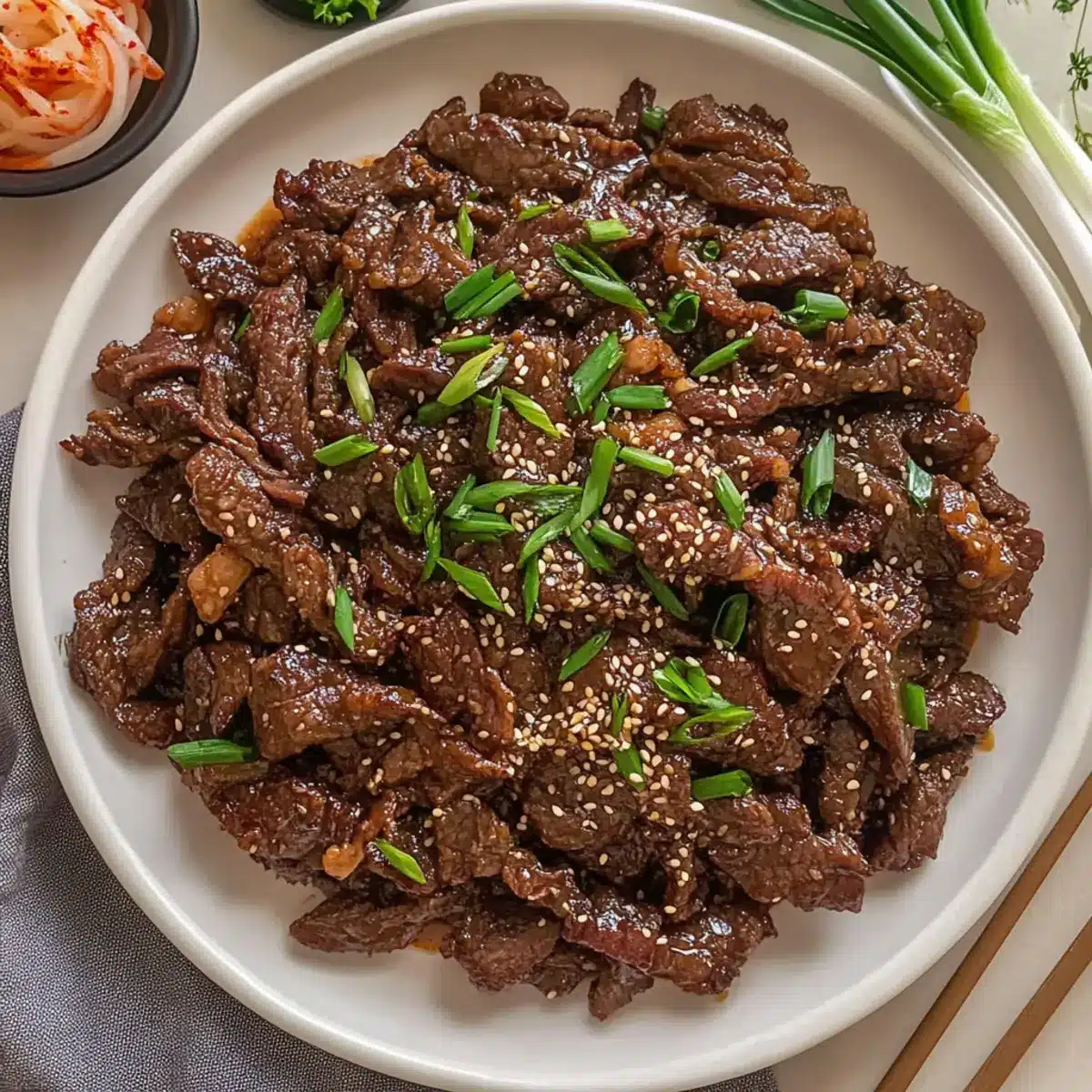
Why is Korean Beef Bulgogi a Must-Try?
Quick and Easy: In just 15 minutes, you can transform simple ingredients into a delicious meal that will impress anyone at the table.
Flavor Explosion: The unique blend of sweet, savory, and smoky flavors will have your taste buds dancing and leave everyone asking for seconds.
Customizable: Whether you prefer beef, pork, or chicken, this bulgogi recipe easily adapts to your favorite proteins, making it versatile for any palate.
Perfect for Meal Prep: Leftovers store wonderfully, so you can enjoy a delicious homemade lunch throughout the week—just like with our Creamy Ricotta Beef Stuffed shells!
Family-Friendly: Kids and adults alike will love wrapping this bulgogi in lettuce with rice or enjoying it atop noodles, making it a hit for everyone at the dinner table.
Authentic Experience: Bring the taste of Korean barbecue into your home, connecting you with rich culinary traditions that are typically enjoyed in restaurants.
Korean Beef Bulgogi Ingredients
• For a truly unforgettable experience, the right ingredients are key!
For the Marinade
- Soy Sauce – Essential for umami and saltiness; substitute with tamari for a gluten-free option.
- Sesame Oil – Adds a rich, nutty flavor; can be replaced with canola or olive oil for a lighter touch.
- Light Brown Sugar – Sweetens the marinade and helps with caramelization; honey or coconut sugar also work great.
- Honey – Extra sweetness that enhances the flavor profile; agave syrup is a good alternative.
- Mirin – Sweet rice wine adds complexity; can swap with apple cider vinegar mixed with a bit of sugar.
- Black Pepper – Has a mild heat that complements the dish; use white pepper for a different flavor.
- Asian Pear – Naturally tenderizes meat and adds sweetness; can replace with Bosc pear or a small apple if needed.
- Garlic – Enhances aroma and flavor; use garlic powder if fresh isn’t available.
- Ginger – Contributes warmth and zing; ground ginger can also be used as a substitute.
For the Beef
- Boneless Ribeye – Preferred for its tenderness; top sirloin or tenderloin can be substituted for a leaner option.
- Yellow Onion – Adds sweetness to the marinade; red onion offers a sharper taste, depending on your preference.
For Garnish
- Toasted Sesame Seeds – Sprinkled on top for nuttiness and visual appeal.
- Green Onion – Fresh garnish that adds color and crunch; substitute with chives if needed.
This delightful blend guarantees a fantastic Korean Beef Bulgogi that will elevate your mealtime and leave everyone craving more!
Step‑by‑Step Instructions for Korean Beef Bulgogi
Step 1: Mix Beef
In a large mixing bowl, combine your thinly sliced boneless ribeye with chopped yellow onion. The onion will infuse sweetness into the beef as it marinates. Use your hands or a spoon to mix gently, ensuring the beef is well coated by the onion, then set aside as you prepare the marinade.
Step 2: Make Marinade
In a food processor, blend together soy sauce, sesame oil, light brown sugar, honey, mirin, black pepper, and a quartered Asian pear along with garlic and ginger until you achieve a smooth consistency. This fragrant marinade will imbue the beef with its signature sweet and savory Korean flavors that characterize this bulgogi.
Step 3: Marinate
Pour the marinade over the beef and onion mixture, ensuring every slice of meat is generously coated. Cover the bowl tightly with plastic wrap or transfer to a zip-top bag to avoid any spills. Refrigerate for at least 2 hours, but preferably overnight, which allows the flavors to meld beautifully for the most tender Korean Beef Bulgogi.
Step 4: Cook
Preheat a large skillet over medium-high heat, then drizzle in a bit of oil to prevent sticking. Once the oil is shimmering, add a portion of the marinated beef to the skillet. Cook for 3-4 minutes, stirring occasionally until the meat is browned and caramelized on both sides, achieving that delightful bulgogi sear. Avoid overcrowding the pan by cooking in batches.
Step 5: Serve
Transfer the cooked bulgogi onto a serving plate, creating a vibrant presentation. Garnish generously with toasted sesame seeds and finely chopped green onions for added flavor and freshness. Serve immediately alongside rice, lettuce wraps, or as a filling for delicious noodle dishes to enjoy this authentic Korean Beef Bulgogi experience.
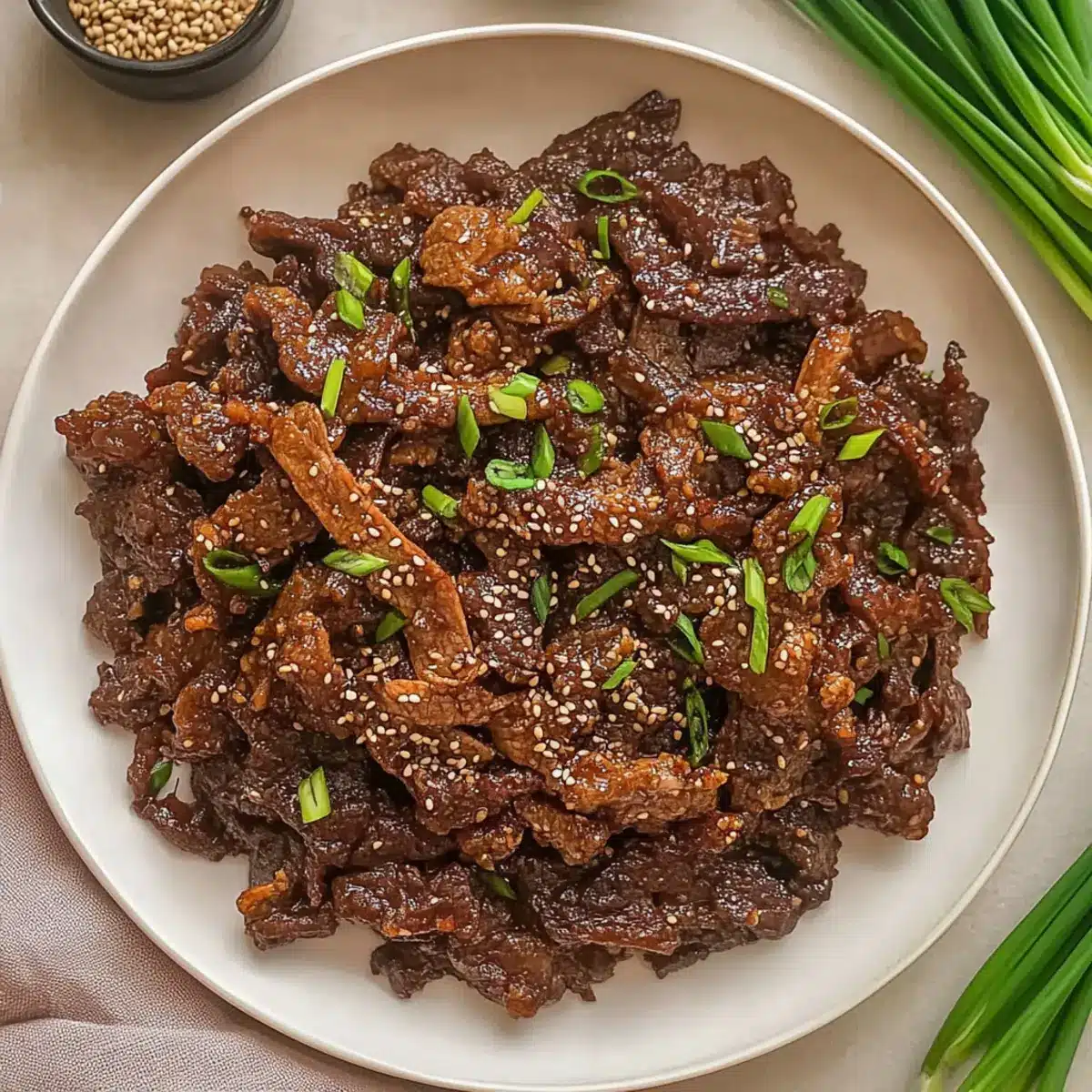
How to Store and Freeze Korean Beef Bulgogi
Fridge: Store leftover Korean Beef Bulgogi in an airtight container for up to 3-4 days. Make sure it’s cooled before sealing to maintain freshness.
Freezer: For longer storage, freeze the bulgogi in a freezer-safe container for up to 3 months. Just make sure to label it with the date for easy reference.
Reheating: Thaw overnight in the fridge, then reheat on the stove over low heat until warmed through, about 5-7 minutes, stirring occasionally to maintain the texture.
Marinade Note: If you don’t plan to eat all the bulgogi, consider freezing it before cooking. Marinated beef can be frozen for later use without compromising flavor!
Make Ahead Options
Korean Beef Bulgogi is a fantastic choice for meal prep, allowing you to enjoy delicious homemade meals without last-minute stress! You can marinate the beef and onions up to 24 hours in advance, ensuring the flavors deepen beautifully. Simply mix the marinade and cover the beef mixture tightly before refrigerating. If you want to take it a step further, you can also slice the meat and prep the marinade 3 days ahead; just keep them in separate airtight containers to maintain quality. When you’re ready to cook, heat a skillet and stir-fry the marinated beef for about 3-4 minutes. This ensures your bulgogi is just as tender and flavorful, all while saving you precious time!
Korean Beef Bulgogi Variations
Feel free to get creative with your bulgogi—there are countless ways to customize this dish to suit your taste preferences!
-
Pork Bulgogi: Swap out beef for thinly sliced pork, maintaining the same marinade for a delicious twist.
-
Chicken Version: Use chicken thighs or breasts for a lighter take; marinate in the same flavorful mixture.
-
Vegetable Boost: Stir in sliced bell peppers or broccoli while cooking for added textures and color.
-
Spicy Kick: Add gochujang (Korean chili paste) or a pinch of red pepper flakes to the marinade for a spicier flavor profile.
-
Herb Garnish: Instead of green onions, try garnishing with fresh cilantro or mint for a refreshing twist.
-
Rice Alternative: Serve bulgogi on top of quinoa or cauliflower rice for a healthy alternative to traditional white rice.
-
Bowl Meal: Create a bulgogi bowl by adding avocado slices, shredded carrots, and sesame seeds for a fun and nutritious meal.
-
Wrap It Up: Use buttery lettuce or rice paper to create wraps filled with bulgogi and your choice of crunchy veggies, making it a fun hand-held meal.
Don’t forget, if you love savory and comforting recipes, you might also enjoy our Parmesan Garlic Beef Bowtie Pasta or the rich flavors in Slow Cooker Beef Brisket. Each dish brings its own unique flair, ensuring your family will never tire of homemade meals!
What to Serve with Authentic Korean Beef Bulgogi
Dive into a delightful dining experience with vibrant meals that enhance the richness of your Korean beef bulgogi.
- Steamed Rice: This fluffy side absorbs the savory marinade, creating a comforting balance with the bulgogi’s rich flavors.
- Crispy Lettuce Wraps: Fresh and crunchy, these add a lightness to the meal, making it perfect for a fun and interactive dining experience.
- Kimchi: A staple of Korean cuisine, this tangy, spicy side elevates the dish, adding bold contrast and enriching your flavor palette.
- Pickled Radish: The crisp and sour nature of pickled radish cuts through the sweetness of the bulgogi, enhancing each bite with refreshing notes.
- Garlic Noodles: These buttery, garlic-infused noodles provide a comforting, hearty base that pairs beautifully with the tender meat.
- Grilled Vegetables: Charred veggies offer a smoky counterpart to the bulgogi and bring a deliciously charred flavor to the garden-fresh elements of the dish.
- Spicy Gochujang Sauce: A drizzle of this Korean chili paste adds a kick that awakens the taste buds, perfect for spice lovers seeking heat.
- Sake or Soju: A glass of this traditional drink complements the rich flavors of the bulgogi, enhancing the overall cultural experience.
- Mango Sorbet: For dessert, this refreshing sorbet cleanses the palate, offering a light and sweet finish to the meal after the rich flavors of bulgogi.
Expert Tips for Korean Beef Bulgogi
- Marinade Magic: A minimum of 2 hours is essential for flavor absorption; overnight is even better for tender and flavorful results.
- High Heat Cooking: Ensure your skillet is hot before adding the beef; this achieves that beautiful caramelization that is key to great bulgogi.
- Batch Cooking: Avoid overcrowding the pan; cooking in portions allows for better searing and prevents steaming the meat.
- Watch the Time: Keep an eye on cooking time; the beef should be tender, with no pink showing, ensuring it’s cooked through but not tough.
- Customization Is Key: Feel free to swap proteins or add vegetables to cater to your taste, making this Korean Beef Bulgogi meal your own!
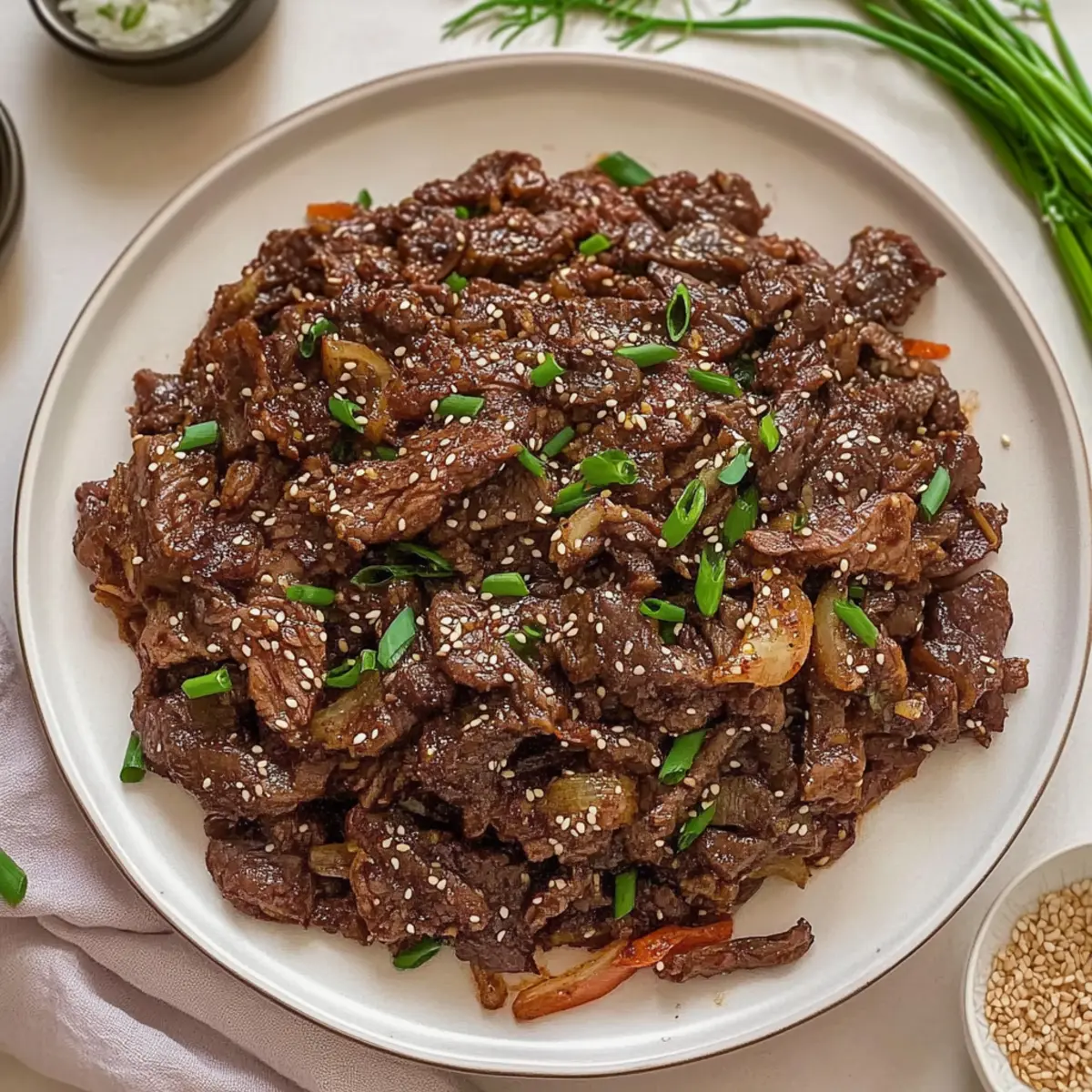
Korean Beef Bulgogi Recipe FAQs
What kind of beef should I use for bulgogi?
Absolutely! For the most tender results, boneless ribeye is preferred. However, you can also use top sirloin or tenderloin if you’re looking for a leaner option. Just make sure to slice it very thinly for that perfect melt-in-your-mouth texture. If you can’t find any of these, even flank steak will work in a pinch!
How long can I store leftover bulgogi?
Very simply, you can keep leftover Korean Beef Bulgogi in an airtight container in the refrigerator for up to 3-4 days. Make sure it cools down before sealing it, which helps maintain its delicious flavor and texture.
Can I freeze Korean Beef Bulgogi?
The more the merrier when it comes to storing! You can freeze Korean Beef Bulgogi for up to 3 months. To do this, place the cooled bulgogi in a freezer-safe container, labeling it with the date. When you’re ready to enjoy it, just thaw it overnight in the refrigerator and reheat it on low heat for about 5-7 minutes until warmed through.
What can I substitute for Asian pear in the marinade?
If you can’t find Asian pear, don’t worry! It’s a great tenderizer and adds sweetness, but you can use a Bosc pear or even a small apple as a substitute. Just remember to grate or puree it for the best results in the marinade, ensuring the flavors meld beautifully.
How can I prevent my bulgogi from getting tough?
To keep your Korean Beef Bulgogi tender, marinate the beef for at least 2 hours—overnight is even better! Cooking on high heat is key, too, so ensure your skillet is hot before adding the meat. Lastly, cook in batches to avoid overcrowding the pan, which can lead to steaming rather than that lovely caramelization.
Is this recipe safe for gluten-free diets?
Absolutely! Simply swap out regular soy sauce for tamari, which is gluten-free. This way, you can still enjoy all the flavors of Korean Beef Bulgogi without compromising your dietary restrictions. Be sure to check other ingredients like mirin or sauces to ensure they meet your needs as well.
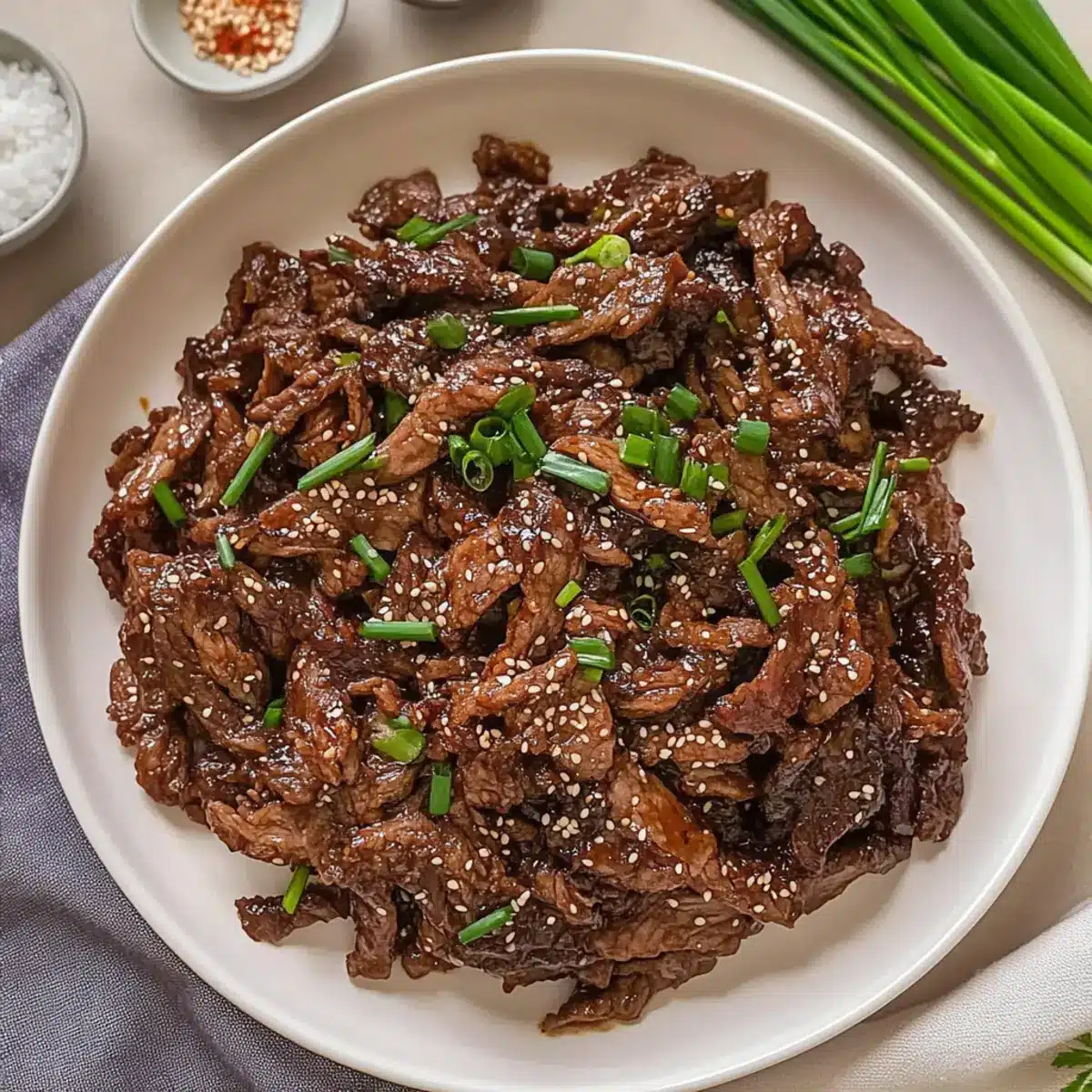
Sizzle Up Authentic Korean Beef Bulgogi in 15 Minutes
Ingredients
Equipment
Method
- In a large mixing bowl, combine thinly sliced boneless ribeye with chopped yellow onion.
- In a food processor, blend together soy sauce, sesame oil, light brown sugar, honey, mirin, black pepper, quartered Asian pear, garlic, and ginger until smooth.
- Pour the marinade over the beef and onion mixture, ensuring every slice is coated. Refrigerate for at least 2 hours or overnight.
- Preheat a skillet over medium-high heat, drizzle in a bit of oil, and add the marinated beef in portions, cooking for 3-4 minutes.
- Transfer the cooked bulgogi onto a serving plate, garnish with sesame seeds and green onions, and serve immediately.
Leave a Reply